
When Cats Are “Affection Eaters”
Courtesy of Freepik.com
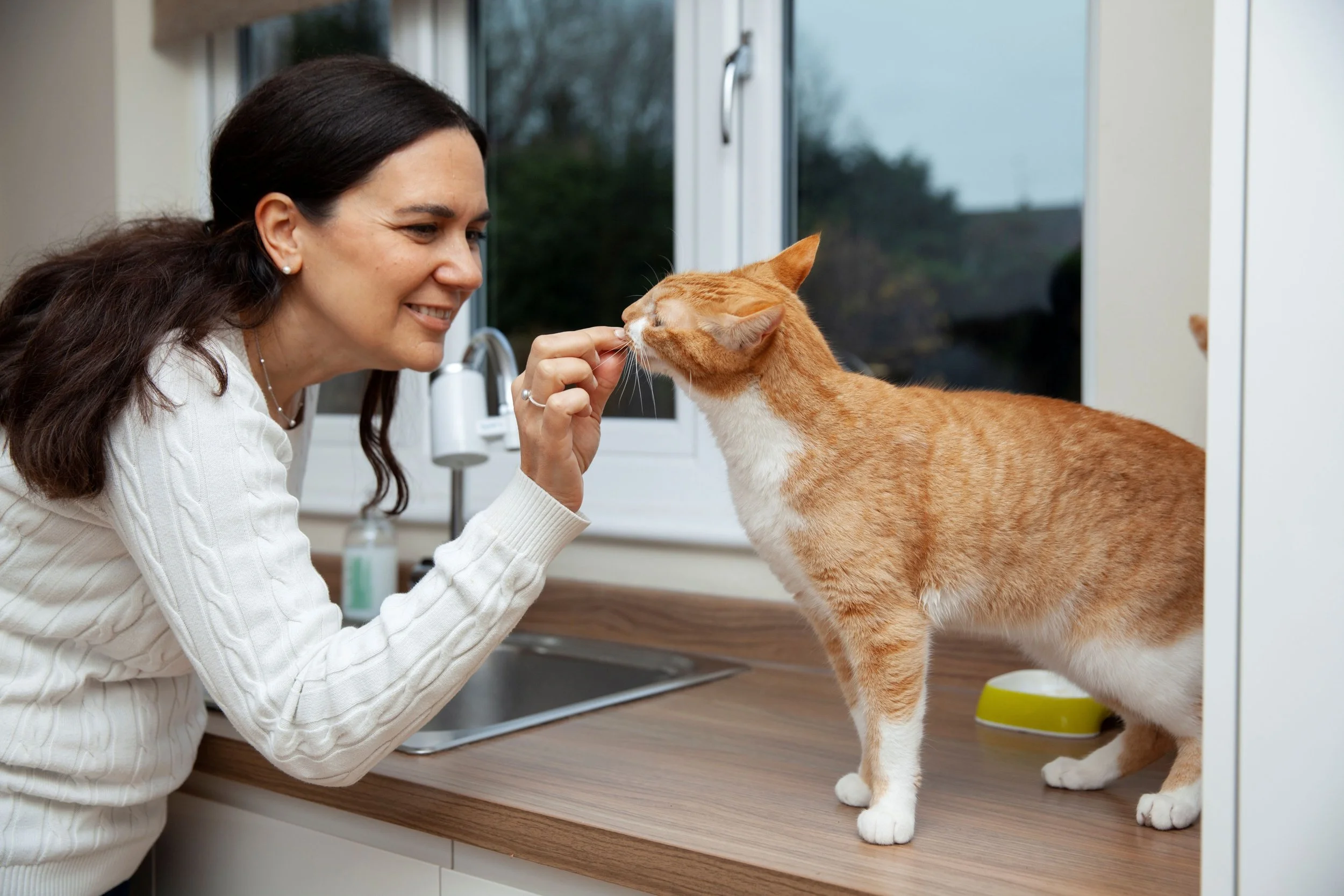
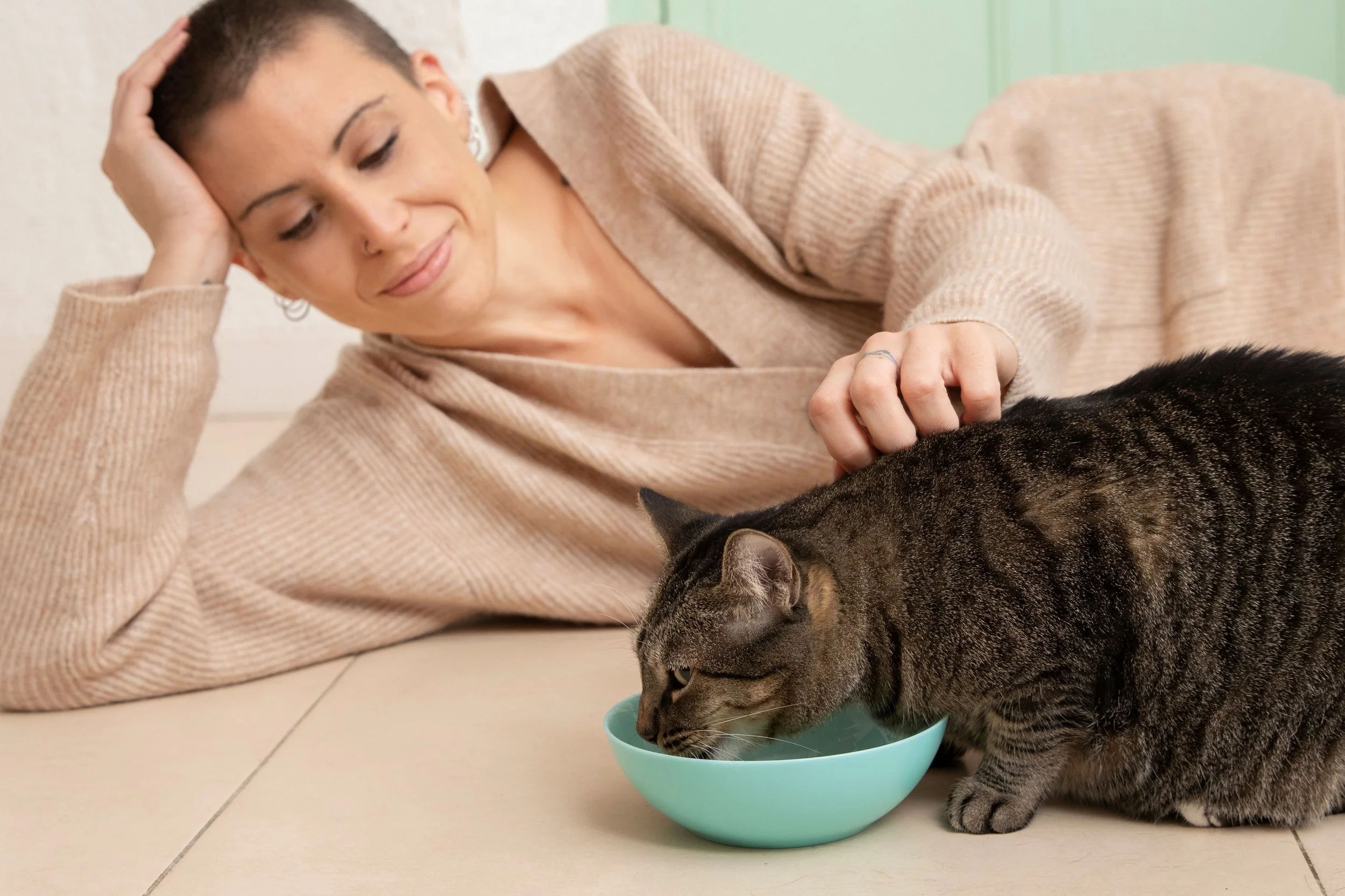
Cats who appear to eat better in the company of people are commonly referred to as “affection eaters.”
Courtesy of Freepik.com
Why, you may wonder? If so, paw-lease consider the five reasons below.
Their instinct for safety: Our domesticated cats’ wild ancestors always ate in groups as a way of protecting themselves from predators. Your own cat may feel that same sense of vulnerability when she eats and is seeking out your presence to reassure and protect her, thereby enabling her to feel safer.
Learned behavior: If your cat was either hand-fed or given constant attention as a kitten while eating, she may have understandably grown accustomed to having you nearby at mealtimes.
Courtesy of Freepik.com
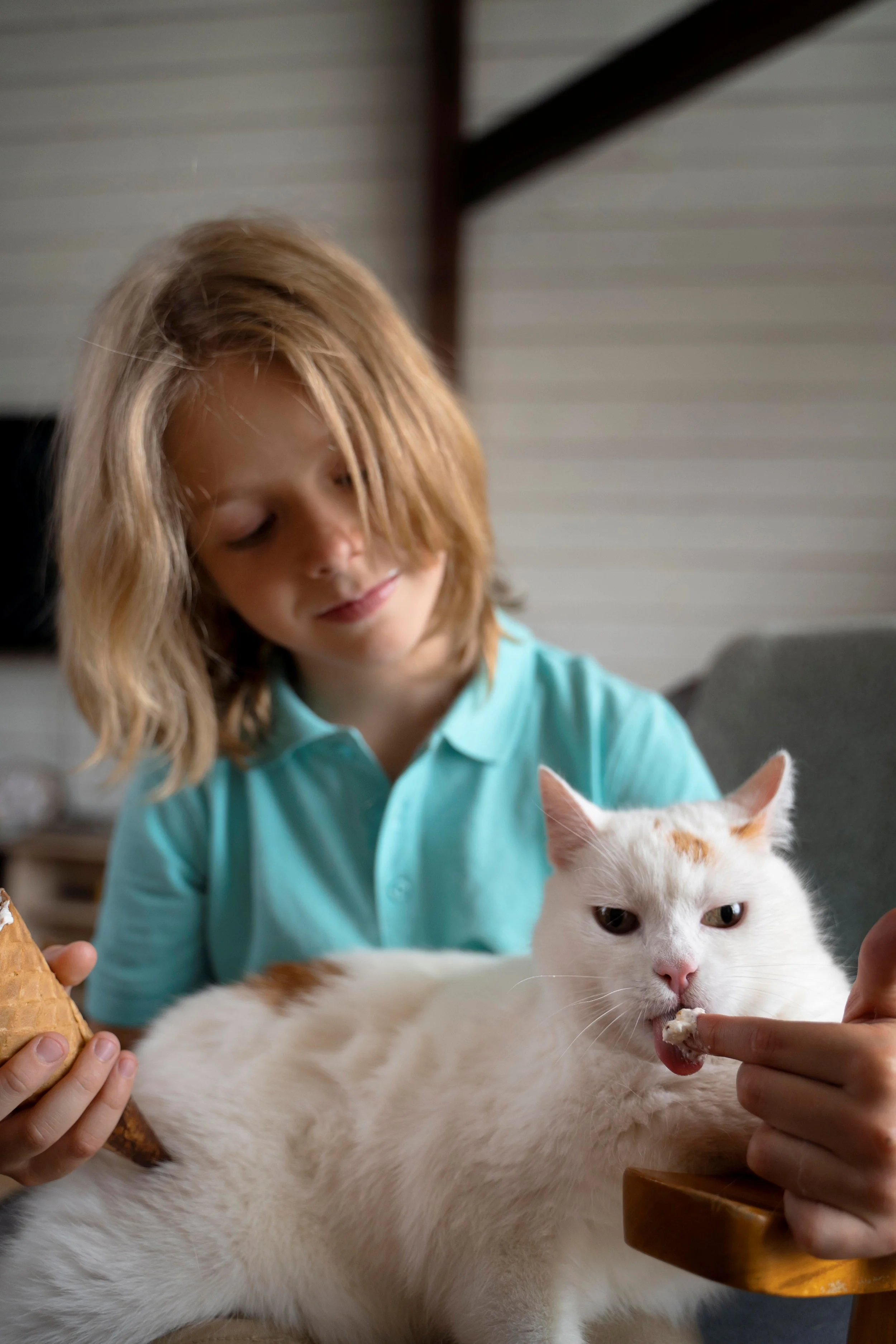
Social bonding: Your cat may not only enjoy your company, she may see you as her most trusted companion, making mealtime the purr-fect time for you to spend together.
Need for encouragement: Your cat may be one of those who insists on being petted while she eats or needs further encouragement to eat such as hearing her kibble dish rattle, having her food brought to her or even being spoon fed.
Fear: If she’s new to your household, your cat may, reasonably and naturally, be reacting to the loss of her previous home and/or human companions, much the way stressful situations can make people lose their appetite.
Help your cat adjust and eat comfortably by following the suggestions below.
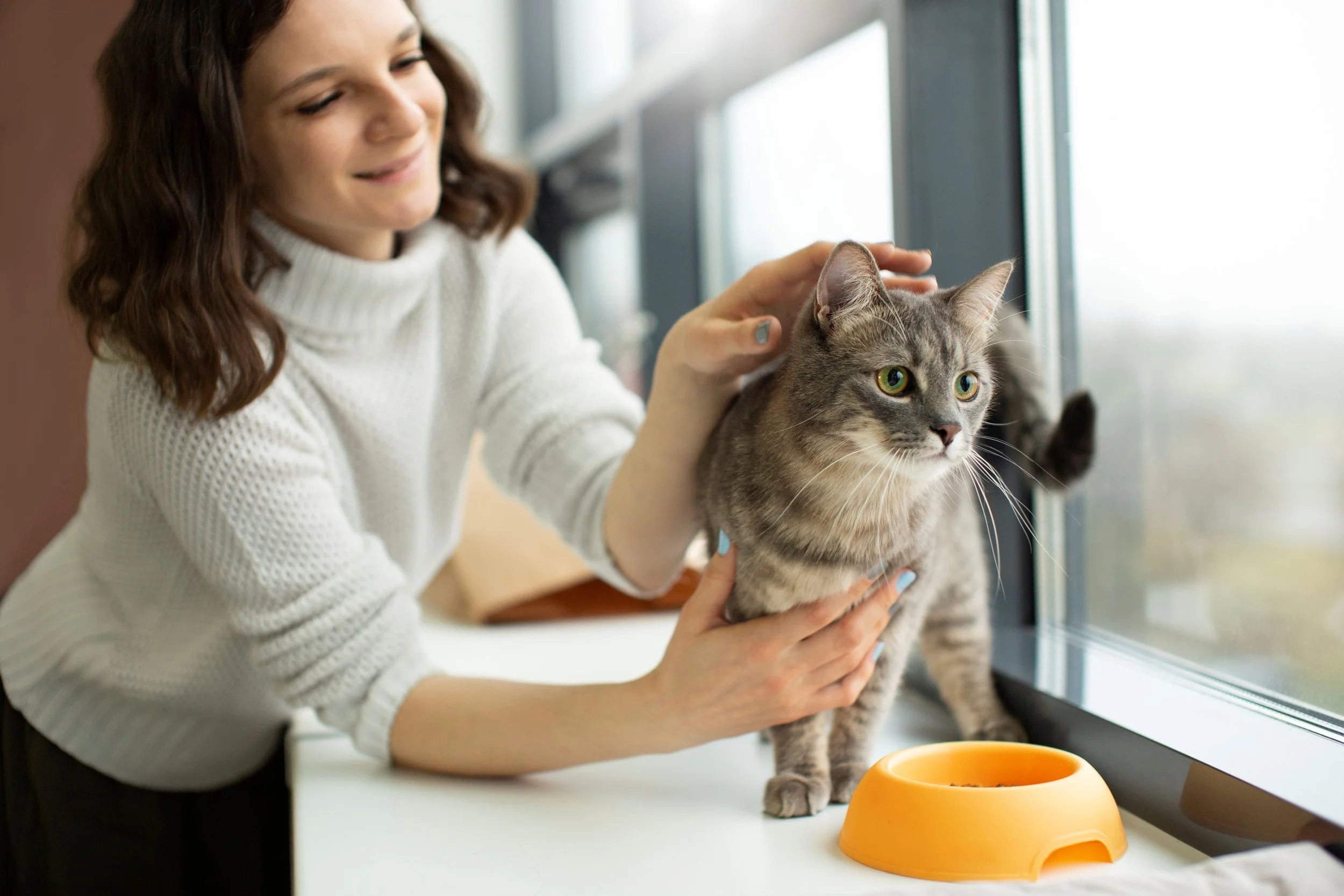
If your cat is indeed new to your household, provide her with a room of her own for several days. This “safe” space should have a litter box at one end of the room and food, water, play toys and a cosy bed as far from the litter box as possible. Visit your cat at regular intervals, sit quietly on the floor, and when she feels relaxed enough to come to you, respond by speaking softly to her and gently petting her.
Courtesy of Freepik.com
Not only are these regular visits and displays of affection vital for you both to bond, interactive playtime is the next step in ensuring that your cat relaxes even more. Why? Exercise has stress-reducing properties for cats just as it does for people.
Once she’s safely incorporated into your life, carefully monitor her eating. Always feed her a measured amount of food on a schedule, so that you can tell if and how much she’s eating.
Make certain that her food is always fresh and never stale: this can contribute to picky eating. Discard all uneaten food in between meals and thoroughly wash her food bowl every day.
Some cats don’t like deep or narrow bowls because they tend to touch or press against their whiskers. A shallow bowl or plate is best.
Some cats prefer food that is “served” at room temperature or slightly warmed. Yours will let you know soon enough!
If your cat isn’t eating well or isn’t eating at all, please contact your veterinarian immediately.
For the most part, though, your “affection eater” will thrive once she settles into your home -- thanks to your patient understanding, loving attention and a reassuring routine.
___________________________________________________________________
Cat Tale stories are written by Nomi Berger who is the bestselling author of seven novels, one work of non-fiction, two volumes of poetry, and hundreds of articles. She is a volunteer writer for Furry Friends in Vancouver, WA and also volunteers her writing skills to animal rescue groups in Canada and the USA. For more information about Furry Friends visit www.furryfriendswa.org or contact them at information@furryfriendswa.org or (360) 993-1097
More Cat Tale stories can be found on the Columbian Newspaper’s website at https://blogs.columbian.com/cat-tales/ The Columbian has hosted the Furry Friends Cat Tale stories from 2015 to August 29, 2025.