
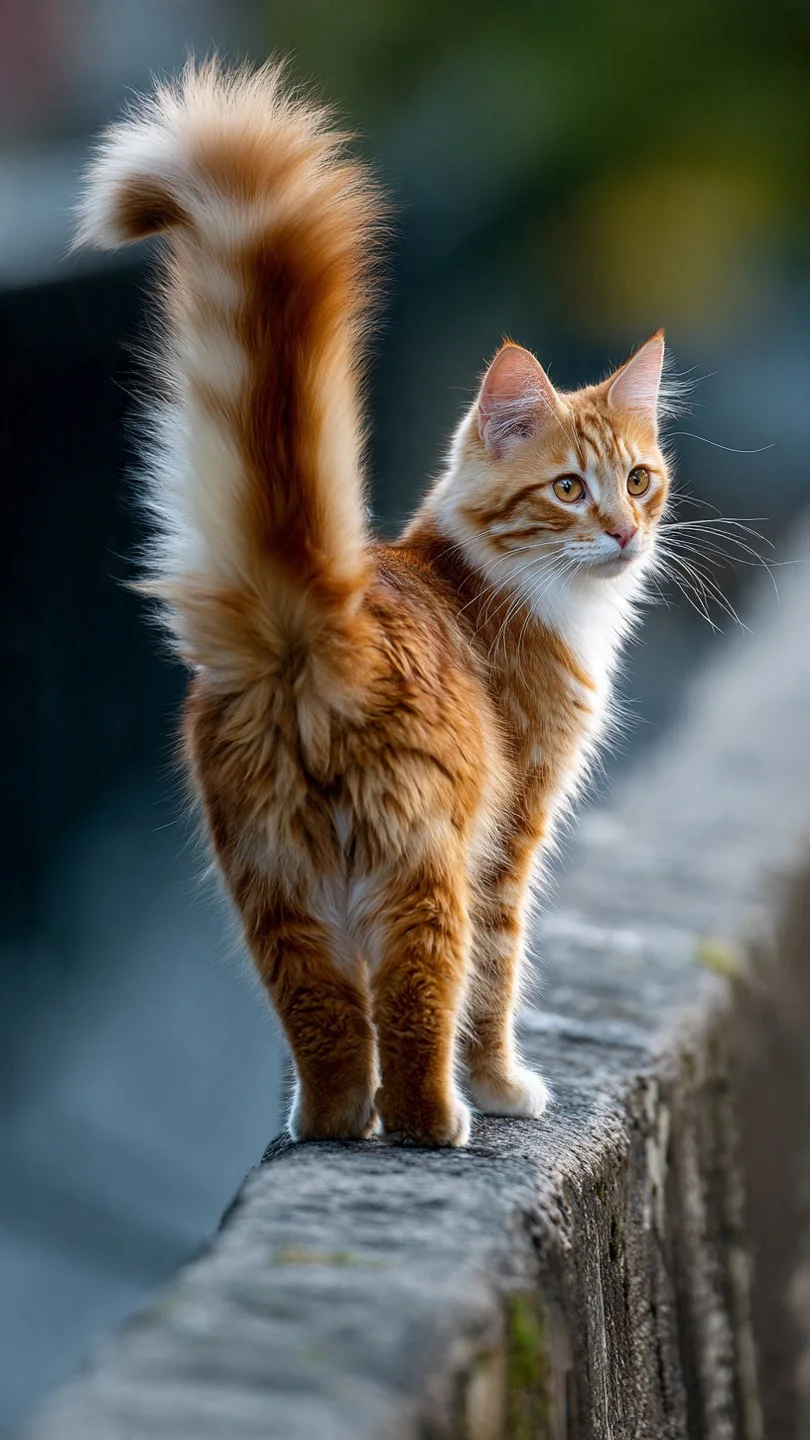
Whether it’s a slight twitch, a pronounced quiver or a sharp swish, your favorite feline’s tail movements reveal a great deal about her state of mind and even her health.
According to vets and certified cat behaviorists, these are paws-ible meanings behind your cat’s twitching tail.
Courtesy of Freepik.com
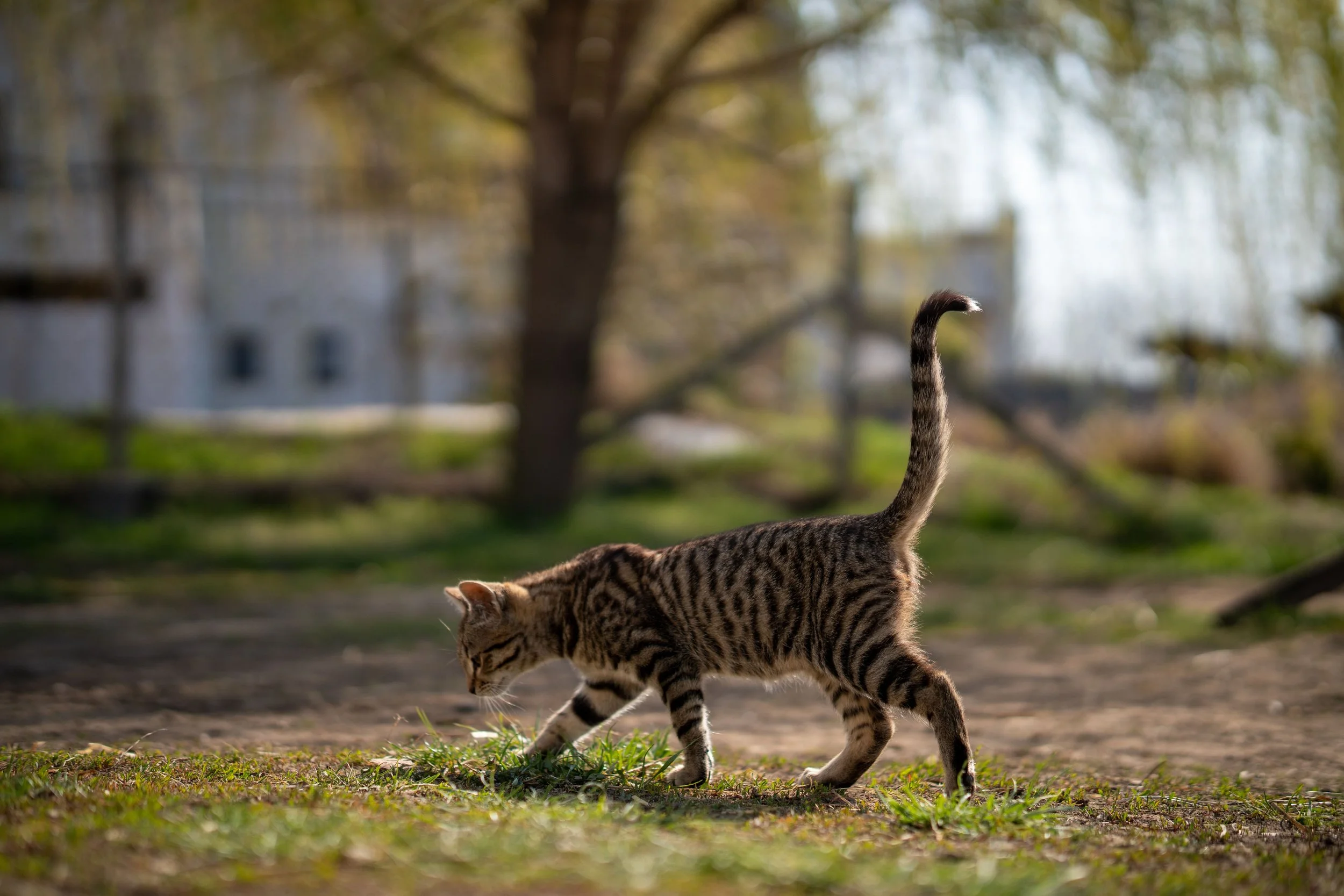
Hunting or playing: Since cats are born predators, tail twitching is often a normal part of their hunting behavior. Look for tail flicks and quivers. These twitches are an involuntary response to the rush of adrenaline and mental focus that occurs when they’re focused on a specific target. Known as “prey mode,” whether their “prey” is a feather wand, a catnip toy or a bird outside the window, directly before pouncing, cats will typically crouch down low, and the tip of their tail may quiver rapidly, similar to a rattlesnake’s rattle.
Courtesy of Freepik.com
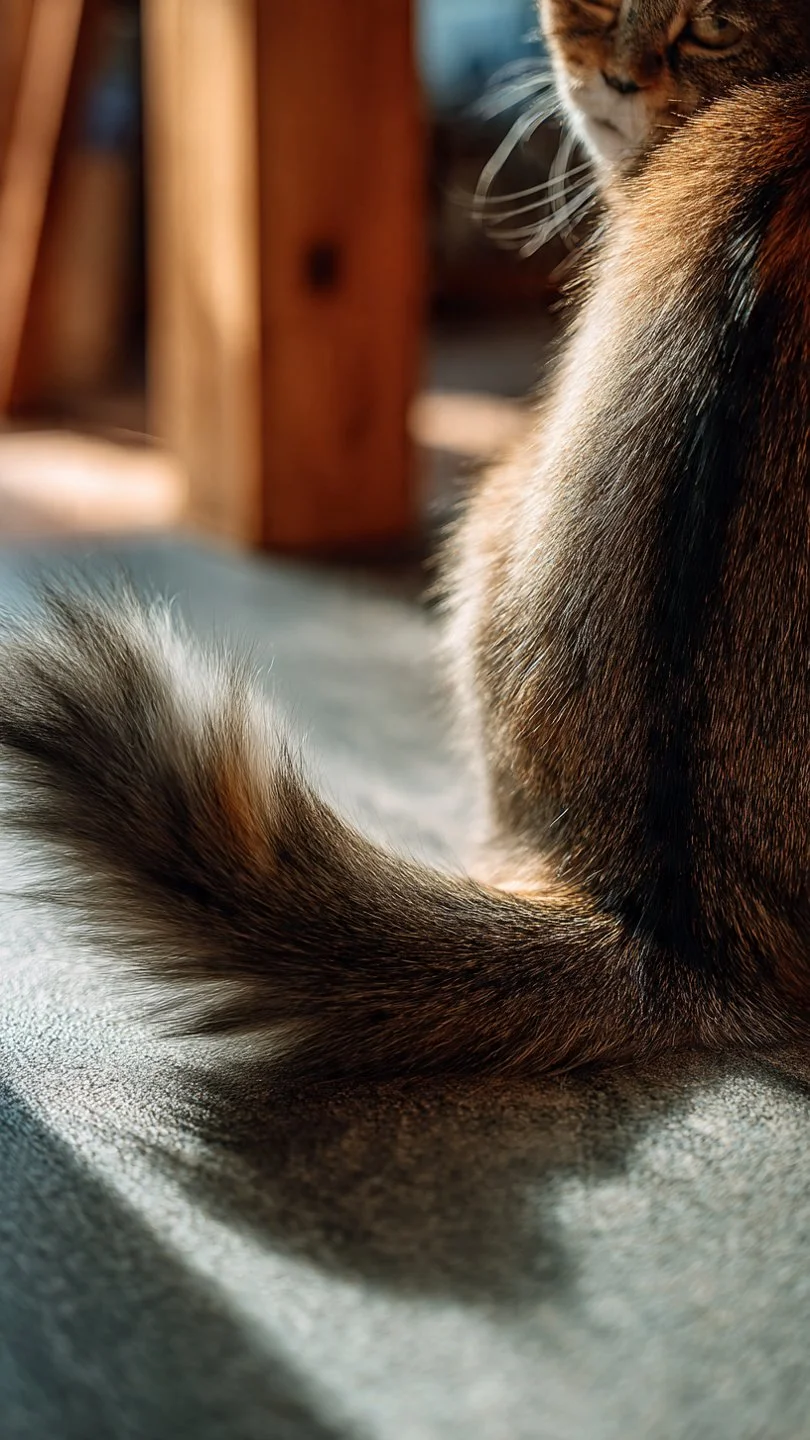
Excitement or happiness: Some cats express their excitement or happiness by twitching their tails. Look for an upright tail and a quickly vibrating shake that’s usually paired with rubbing against your legs. You might be privileged enough to experience this whenever you return home, enter a room or prepare their dinner. Think of it as the feline version of performing a “happy dance.”
Annoyance or overstimulation: Annoyed or overstimulated cats will have tails that move a great deal. Look for thrashing motions and tip twitching. You might see either of these signs when your cat’s been petted more than enough or if she’s annoyed by the presence of another animal nearby. This is her way of signalling both her discomfort and asking for space. Should you ignore that message, it could quickly escalate into a hiss or worse, a swat.
Courtesy of Freepik.com
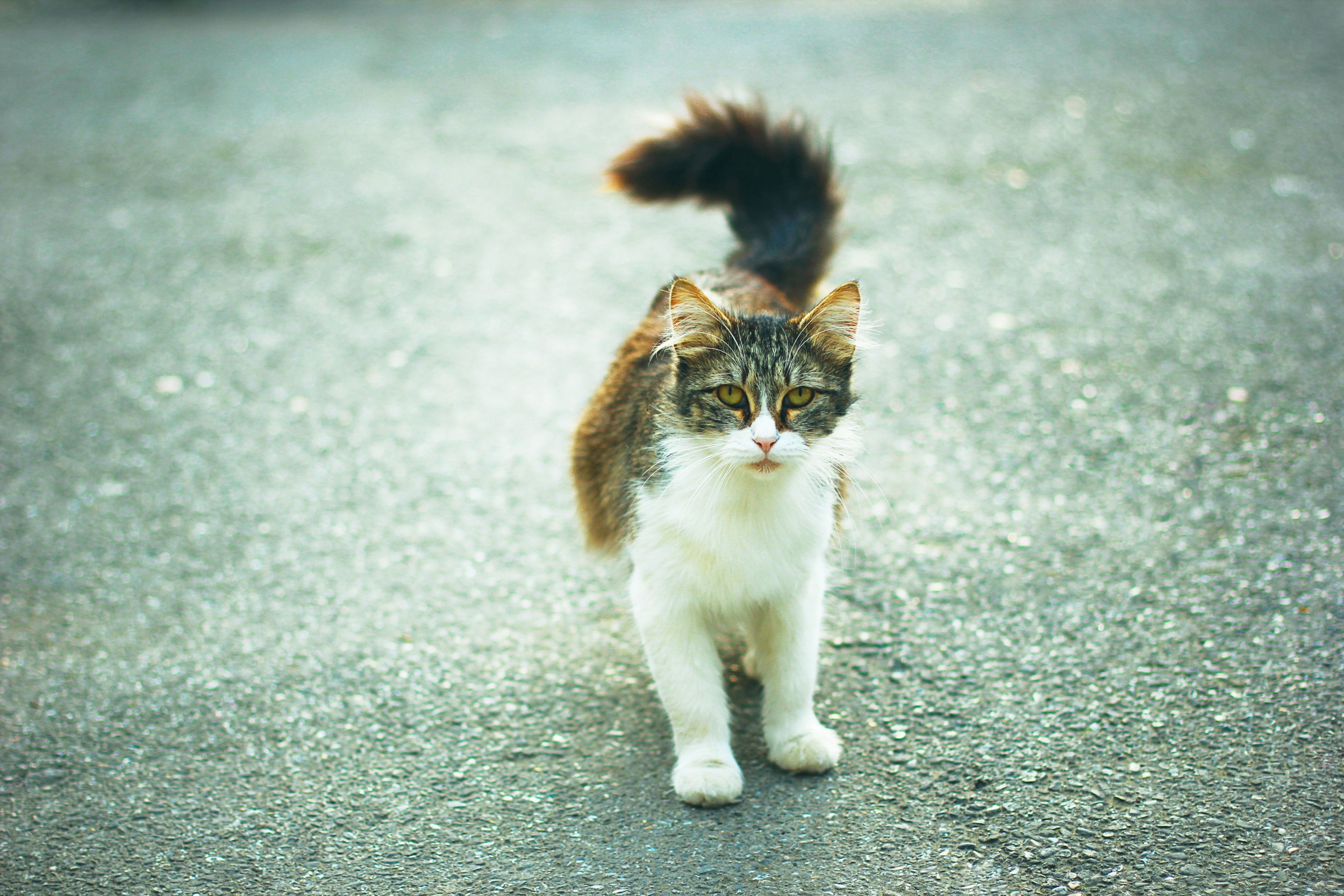
Spraying: When spraying, cats’ tails stand tall and quiver swiftly as they release a small amount of urine onto a vertical surface such as a wall or a piece of furniture. Look for an upright tail, quivers and a vibrating motion. The vibrating motion helps disperse the urine and its pheromones that serve as scent markers to establish their “territory.” Most often triggered by stress in the presence of other cats, spraying indoors is an issue best discussed with your vet to rule out any underlying health issues.
Cat confrontation: Whether adjusting to a new addition to your feline family or meeting someone else’s cat, your cat might react to this “intruder” with a tail that’s thumping. Look for tail thumping as being large, irregular movements (not quick twitches) while she’s looking at this other cat. It’s kittyspeak for “back off” before it escalates into actual physical conflict.
Health issues: Tail twitching may signal an underlying medical condition. Consider the following:
Skin issues: flea allergy dermatitis or food allergies can cause itchiness and irritation along the back or tail, leading to twitching or twitch-like movements.
Infections: some fungal, parasitic or viral infections can affect the nervous system or create an inflammation that may cause tail twitching.
Injuries to the spine, pelvis or tail can damage nerves and lead to twitching, pain or reduced tail control.
Spinal cord impingement: pressure on the spinal cord caused by an infection, inflammation or a mass can lead to abnormal nerve signals, resulting in involuntary tail twitching or sensitivity.
Feline hyperesthesia syndrome (FHS): a rare neurological condition that causes sudden bursts of twitching, skin rippling and extreme sensitivity along the spine or tail, often resulting in excessive self-grooming or tail-chasing.
If your cat exhibits any of these symptoms, please make an appointment with your vet for a thorough assessment.
___________________________________________________________________
Cat Tale stories are written by Nomi Berger who is the bestselling author of seven novels, one work of non-fiction, two volumes of poetry, and hundreds of articles. She is a volunteer writer for Furry Friends in Vancouver, WA and also volunteers her writing skills to animal rescue groups in Canada and the USA. For more information about Furry Friends visit www.furryfriendswa.org or contact them at information@furryfriendswa.org or (360) 993-1097
More Cat Tale stories can be found on the Columbian Newspaper’s website at https://blogs.columbian.com/cat-tales/ The Columbian has hosted the Furry Friends Cat Tale stories from 2015 to August 29, 2025.