
Can Cats See in the Dark?
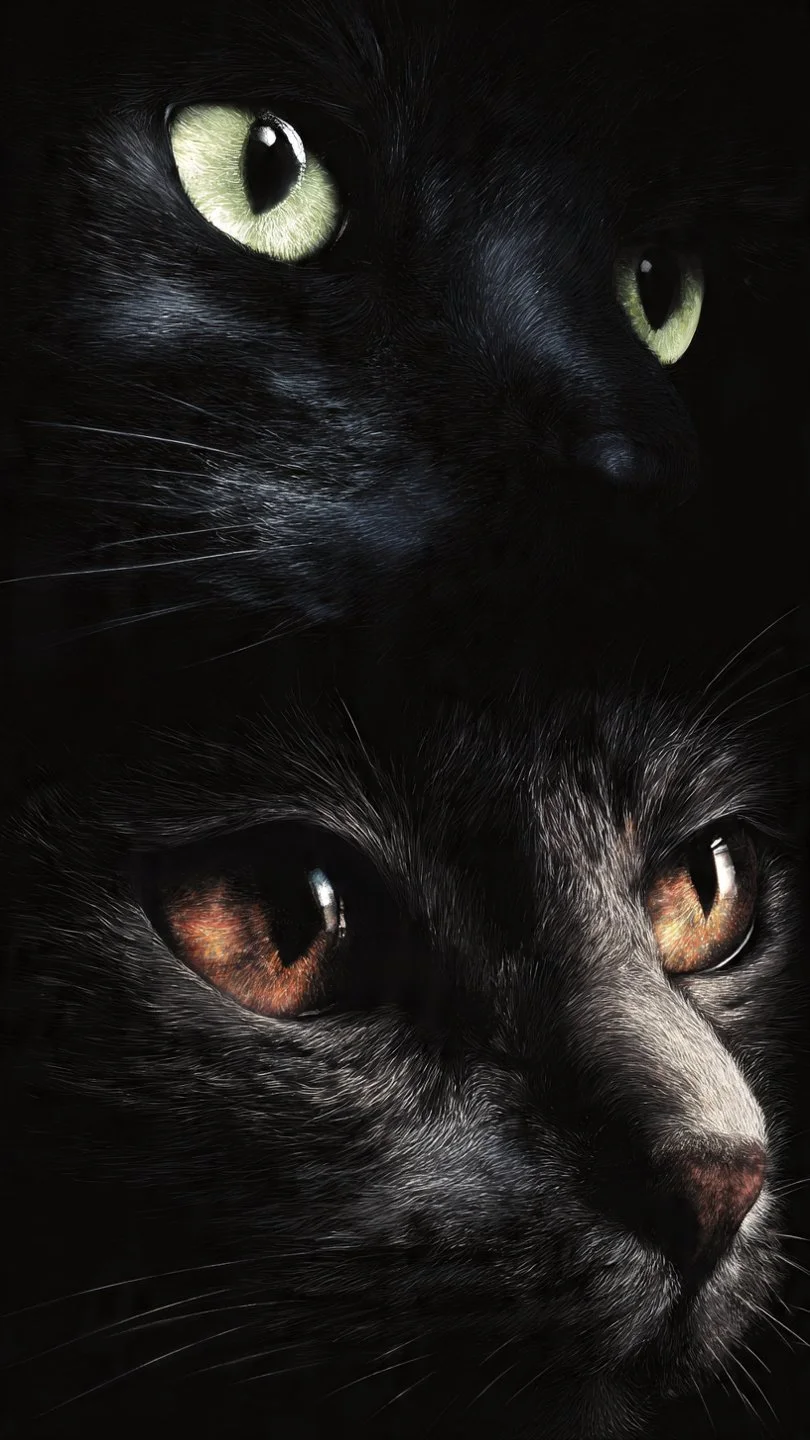
Since many cats are active at night, have you, as cat parents, ever wondered if they can see in the dark as they roam around the house? Should you leave a nightlight on when you go to bed or will they be safe -- and happy -- without one?
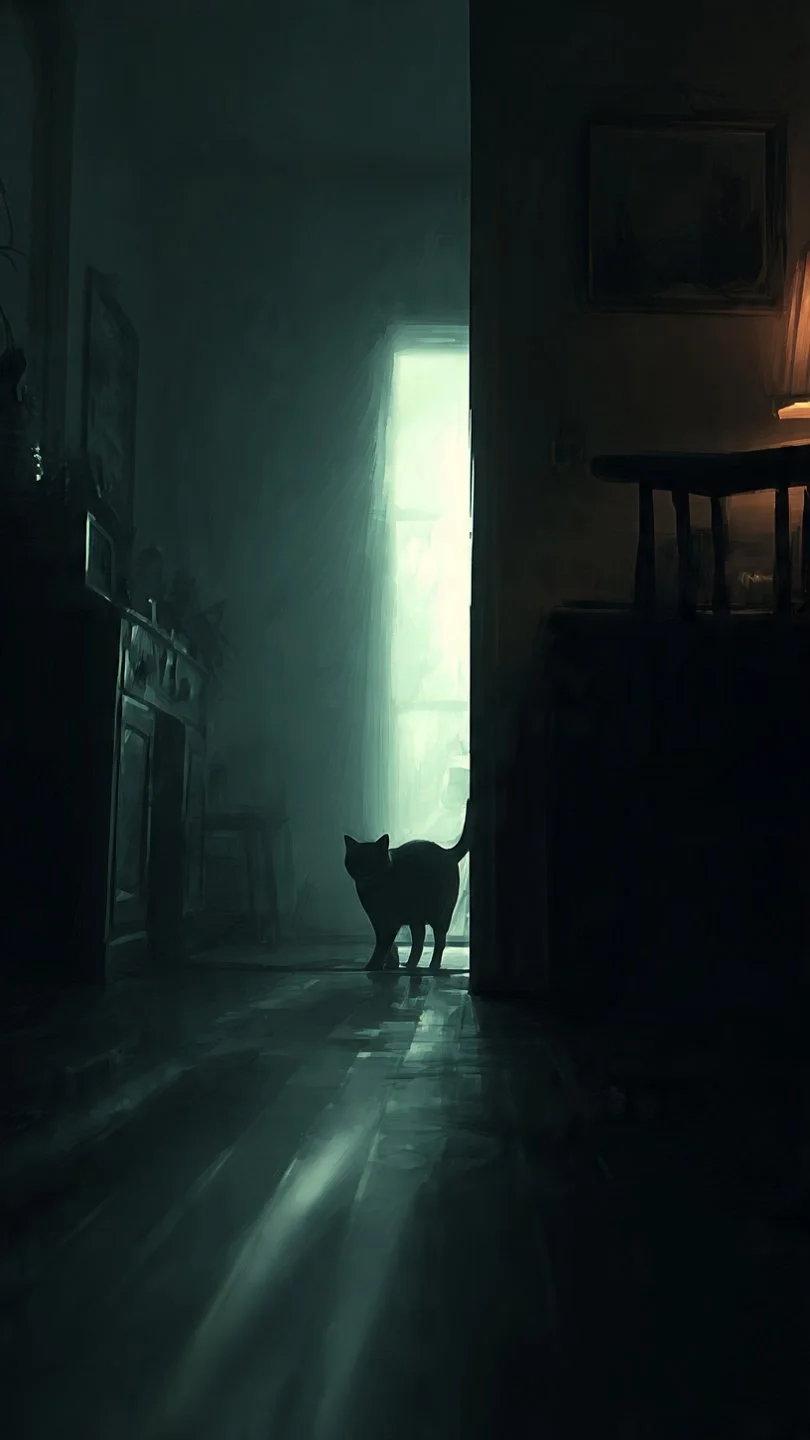
According to veterinary ophthalmologists, while cats can see very well in low-light conditions, this doesn’t mean that they have the kind of night vision people get from wearing night-vision goggles. What it simply means is that in conditions too dark for people to see, they can still see very well. A common misconception is that they can see in total darkness, but some amount of light is required for even their extraordinary eyes to see.
Consider, then, the following adaptations within cats’ eyes that enhance their night vision:
More rod photoreceptors within their retinas: the increased numbers of retinal rod photoreceptors are primarily responsible for dim-light vision. Because a cat’s eyes have more rods than people’s eyes, our feline friends not only see better in the dark than we can, they’re better at detecting motion than we are.
Tapetum lucidum: this is Latin for a “reflective structure” in the eye beneath the retina that acts as a reflective layer or mirror to reflect light in cats’ eyes. The reflection of light within their eyes helps stimulate more of the above-mentioned photoreceptors that allow cats to have remarkably improved vision in dim or low light conditions. It’s also the reason behind what we, as people, rather lyrically describe as “eyeshine” in cats.
Slit-shaped pupils: Cats have vertical, slit-shaped pupils that dilate widely, thereby creating a very large opening for light to enter their eyes at night.
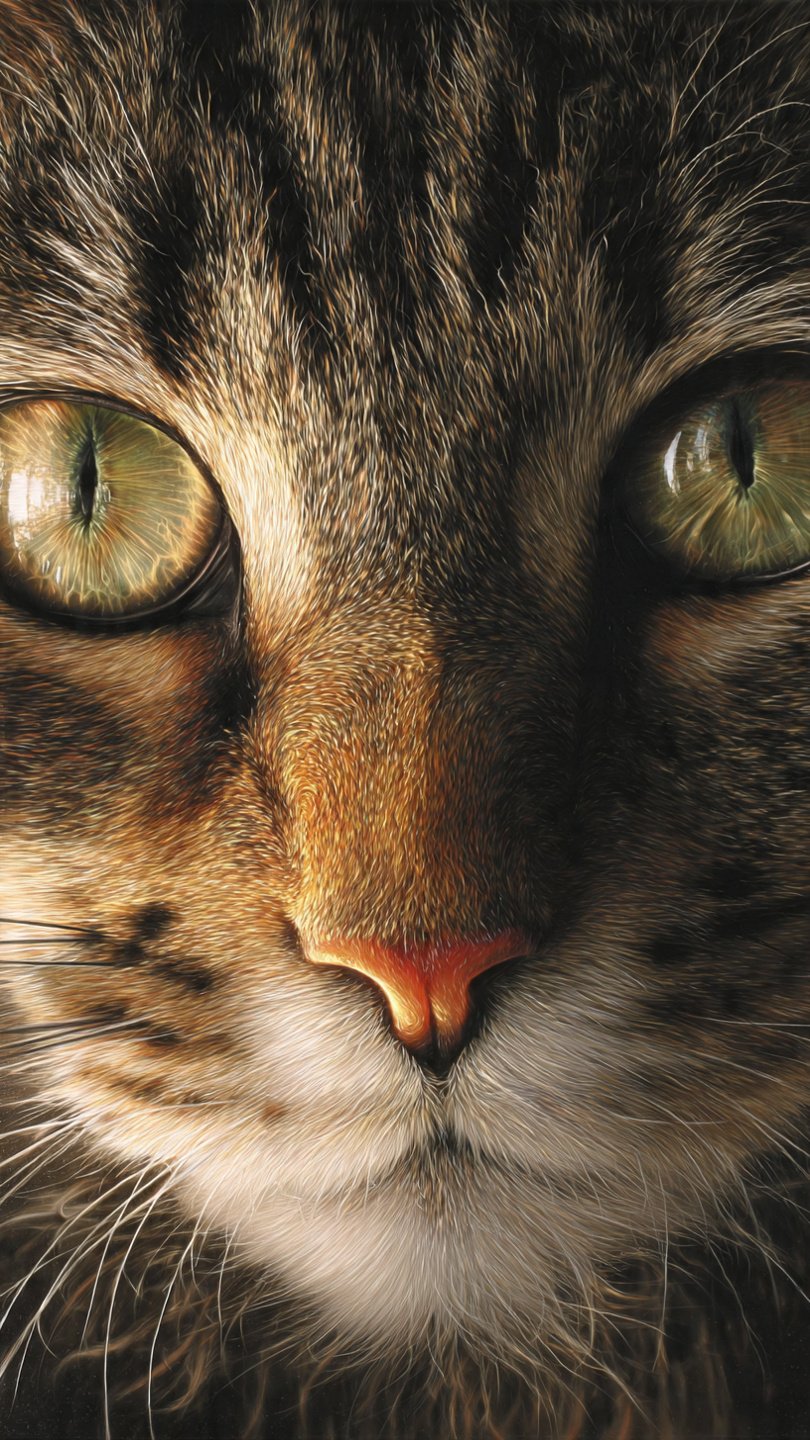
Cats’ eyes are generally quite similar to people’s eyes in that they’re trichromatic, meaning that their eyes and ours contain three kinds of cones to see the colors red, green and blue. However, the way our feline friends see the world is more akin to the way color-blind people see the world. While cats may still be able to see blue and green, they can, quite easily, get colors like blue and purple or red and pink confused with one another.
Another way a cat’s vision differs from our vision is in their visual acuity or sharpness.
On the other hand, cats are nearsighted. They’re unable to clearly see objects as far away from them as people can. In other words, what they see at a distance are blurry objects, while what they see close by are purr-fectly clear and crisp images.
Compared with people, cats also have a faster flicker fusion frequency (FFF). This is the rate at which intermittent frames of light are perceived as one steady, continuous picture. The human eye can only detect flicker at 50 to 90 Hz, but because cats have a minimum light detection threshold of up to seven times less than people have, they only require one-sixth of the amount of light we need in order to see.
Lastly, skull shape plays an important role when it comes to a cat’s peripheral vision. The further a cat’s eyes are from each other, the more they can see in their peripheral vision.
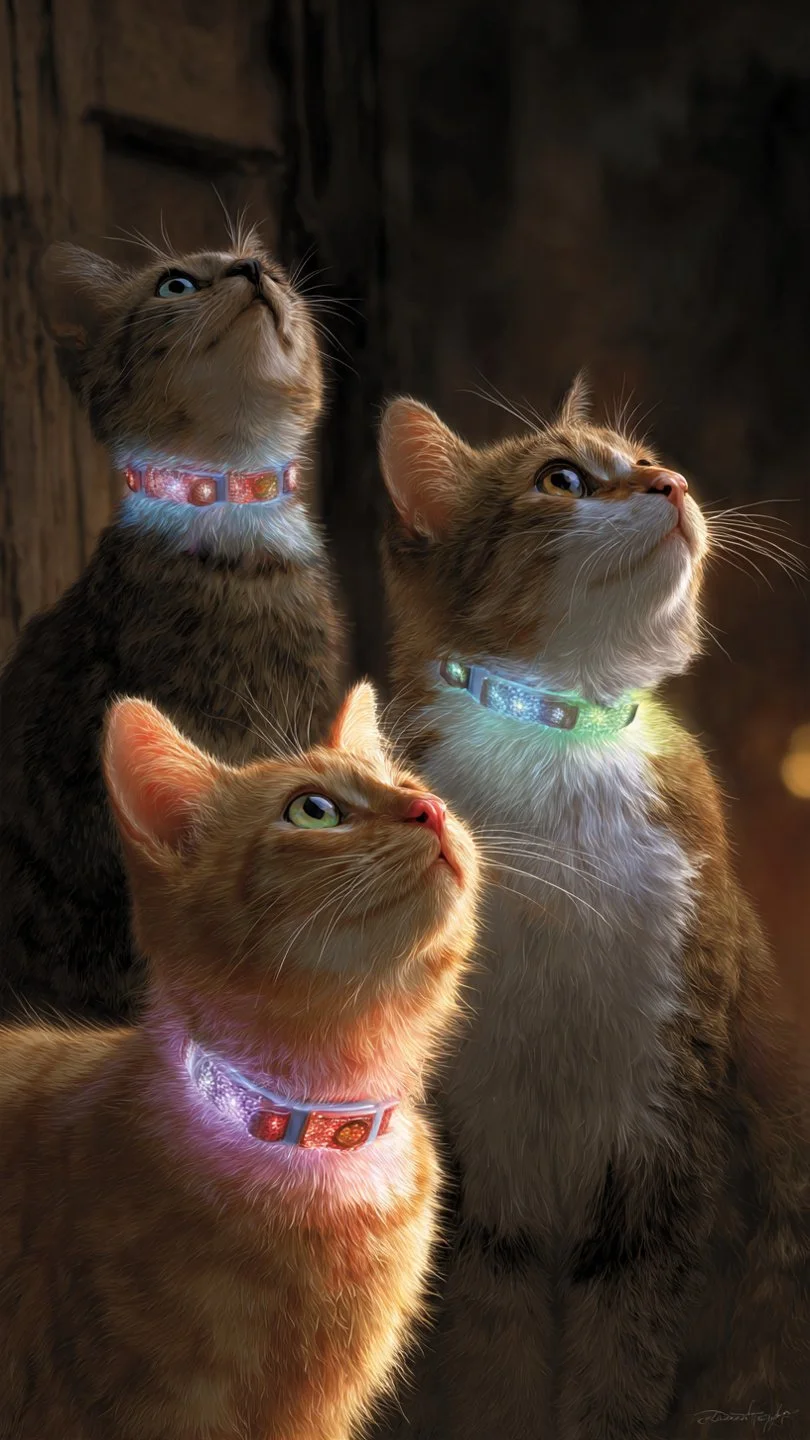
Since, like people, cats cannot see when there is no light whatsoever, should your cats be a “night owls,” it may help to make adjustments around your home so they can more easily and safely navigate their way around. Specially designed keychains, for example, glow in the dark like a small night light, shedding light on an otherwise dark room. Also available are specially designed glow-in-the-dark and reflective cat collars (some are even equipped with a small bell) that will provide enough of the light cats require as they roam in the middle of the night while you sleep.
___________________________________________________________________
Cat Tale stories are written by Nomi Berger who is the bestselling author of seven novels, one work of non-fiction, two volumes of poetry, and hundreds of articles. She is a volunteer writer for Furry Friends in Vancouver, WA and also volunteers her writing skills to animal rescue groups in Canada and the USA. For more information about Furry Friends visit www.furryfriendswa.org or contact them at information@furryfriendswa.org or (360) 993-1097
More Cat Tale stories can be found on the Columbian Newspaper’s website at https://blogs.columbian.com/cat-tales/ The Columbian has hosted the Furry Friends Cat Tale stories from 2015 to August 29, 2025.